The Story
1. Why Green Flags Matter
In our fast-paced digital world, we’re often quick to notice the red flags that raise our concerns, yet we rarely take a moment to reflect on what green flags might look like. In the realm of messaging apps, where first impressions are formed in an instant and trust can be hard to come by, recognising these positive signs is just as crucial as being wary of the negative ones. A “green flag” in online communication goes beyond simple kindness; it embodies emotional maturity, respect for one another’s boundaries, and the ability to foster a safe and supportive atmosphere for everyone. Today, qualities like mutual respect, collaboration, and emotional safety are essential for nurturing healthier relationships and encouraging uplifting interactions. It’s necessary to celebrate these green flags, as they not only enrich our connections but also remind us of the compassion we can extend to one another in this digital age. (Source: 10 Green Flags for Great Relationships, The Psychology Behind Green Flags: Why They Matter) Platforms that prioritise moderation and community building play a crucial role in nurturing psychological trust among users.
Several studies highlight that moderated conversations not only help reduce harmful behaviours but also create a more supportive and engaging environment in online communities. Trust-and-safety experts emphasise the importance of robust verification processes, clear privacy policies, and empowering user tools, such as reporting and blocking options. These elements are essential for promoting ethical practices on digital platforms, as they significantly influence user retention and the overall trust in the brand. By focusing on these aspects, platforms can foster a safer and more welcoming space for everyone. (Source: What is Trust and Safety? A Comprehensive Guide) In this article, our team will reveal the green flags not only in the people we chat with—but in the apps we choose, placing BeFriend in sharp relief as a platform built around emotional safety and genuine connection.



2. What a Green Flag App Looks Like
When selecting a chat app, it’s essential to prioritise safety to create a positive and secure environment for all users. This can be achieved by incorporating three essential features into the experience.
Firstly, profile verification plays a crucial role in minimising the risks that come with anonymity. By ensuring that users are authentic, we can help foster a community that’s free from abuse and fake accounts. Many trusted platforms strive to protect their users by implementing measures such as face matching, age verification, or official ID checks, promoting a safer space where everyone feels respected and valued. (Source: Meta’s Approach to Safer Private Messaging on Messenger and Instagram Direct Messaging)
It’s essential to recognise that clear and transparent community guidelines, along with consistent enforcement, play a vital role in fostering a supportive environment. When communities have well-defined rules and proactive moderation, they not only establish a foundation for positive interactions but also create a space where harmful behaviours are less likely to occur. This thoughtful approach can lead to a greater sense of civility and understanding among users, ultimately making everyone feel more valued and respected. (Source: Consensus on community guidelines: an experimental study on the legitimacy of content removal in social media). This suggests that effective moderation frameworks enhance rule compliance and build trust.
Third, easy-to-use reporting and blocking tools provide users with a sense of control over their online experiences. When platforms prioritise accessibility to these options, they often foster a stronger bond of trust and loyalty among users. Meta’s 2022 safety report highlights that simplifying in-app reporting and prioritising reviews significantly contributes to positive outcomes for users. (Source: Meta’s Approach to Safer Private Messaging on Messenger and Instagram Direct Messaging)
Collectively, these features not only help to prevent harm but also encourage a more nurturing and respectful environment. This empowers users to feel safe and valued, rather than vulnerable or at risk.
3. So, What Do “Green Flags” in Chat Apps Actually Look Like?
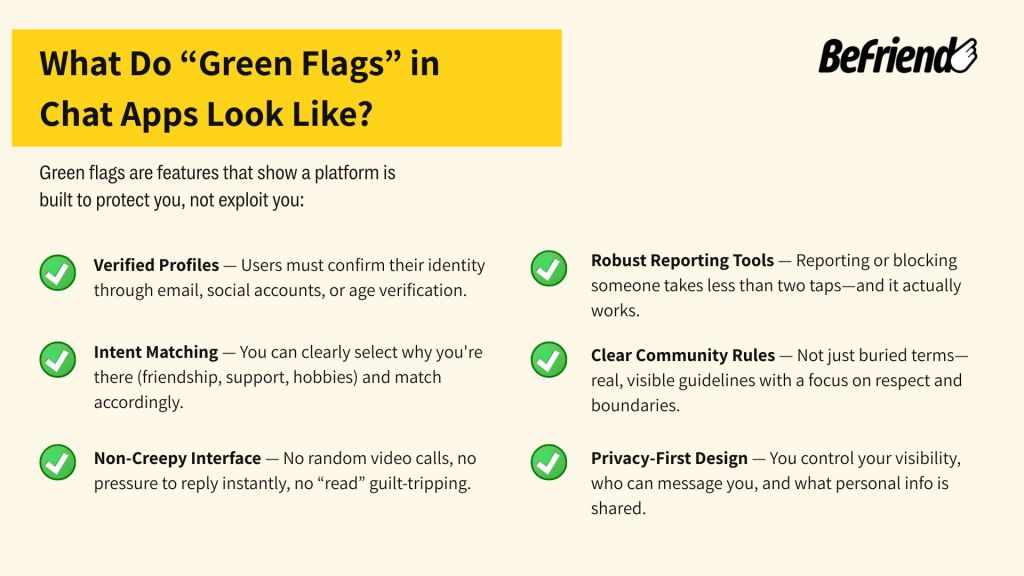
If you’ve ever downloaded a chat app and found yourself feeling overwhelmed, ghosted, or even uncomfortable, know that you’re not alone in that experience. Many users share the same concerns: How can I tell if this app is genuinely safe to use? This is where the concept of green flags comes in. These are the reassuring features and thoughtful design choices that indicate a platform is focused on your safety and well-being rather than seeking to exploit you. Let’s explore the signs to look out for together:
- Verified Profiles — Users must confirm their identity through email, social accounts, or age verification.
- Intent Matching — You can select why you’re there (friendship, support, hobbies) and match accordingly.
- Non-Creepy Interface — No random video calls, no pressure to reply instantly, no “read” guilt-tripping.
- Robust Reporting Tools — Reporting or blocking someone takes less than two taps—and it works.
- Clear Community Rules — Not just buried terms—fundamental, visible guidelines with a focus on respect and boundaries.
- Privacy-First Design — You control your visibility, who can message you, and what personal info is shared.
Platforms and chat apps like BeFriend are thoughtfully crafted with your comfort in mind, prioritising the green flags that foster genuine connections. After all, we understand that real relationships can only flourish when you feel safe and free to be your true self.
4. Green Flags in the People You Meet
When connecting with someone new online, the most meaningful green flags often come in the form of subtle yet consistent behaviours that truly reflect emotional safety and maturity. Active listening, as highlighted by communication experts like Carl Rogers and backed by psychological research, goes beyond simply hearing someone’s words. It involves a genuine effort to understand their feelings and perspectives, reiterating what they share in a way that fosters clarity, empathy, and trust. This kind of compassionate communication can create a safe space for both individuals, encouraging deeper connections and mutual understanding. (Source: 7 Active Listening Techniques For Better Communication) Neuroscience even shows that perceiving active listening lights up the brain’s reward centres—making people feel seen, valued, and emotionally engaged.
Open and respectful communication is more than just the words we use; it’s about truly honouring each other’s boundaries, showing empathy, and being fully present, even when discussing challenging topics. Mental health professionals often emphasise that engaging in respectful dialogue and recognising boundaries are key elements in nurturing healthy relationships. These practices help create a safe space where everyone feels valued and understood. (Source: Using Active Listening to Enhance Your Relationships)
Meanwhile, someone who lets you reply at your own pace—without guilt or pressure—is signalling emotional intelligence and emotional regulation. Research ties this patient communication style to greater satisfaction, less conflict, and a stronger social bond.s
And when conversations include curiosity-driven, reflective questions—not generic small talk—it’s a sign of genuine interest and emotional engagement. This kind of conversation predicts more positive outcomes and mutual satisfaction, both online and offline. (Source: Why Communication In Relationships Is So Important)
These behaviours create more than pleasant conversation; they foster an emotional environment where users feel secure, truly heard, and excited to connect again.

5. Our Final Thoughts: Authenticity and Safety Are Above Everything
As we wrap up, it’s essential to recognise that meaningful friendships—especially in digital environments—should be supportive rather than exhausting. Prioritising emotional safety and mutual respect is a practice that not only reflects good manners but also promotes overall well-being. Research indicates that high-quality friendships can enhance resilience, elevate self-esteem, and contribute to improved mental health, potentially even leading to a longer lifespan (Source: American Psychological Association, The science of why friendships keep us healthy). In online communities, effective moderation and a culture of mutual respect can help diminish harmful interactions, fostering trust and creating a space where conversations feel safer and more authentic. For LGBTQ+ youth and other marginalised groups, thoughtfully curated digital spaces that emphasise safety and empowerment can provide the affirmation that may be lacking in their offline experiences (Source: Parents.com, New Research Shows that Many LGBTQ+ Youth Feel Safer Online than IRL).
At BeFriend, we are committed to creating such positive environments—where empathy, clear boundaries, and purposeful intention guide our conversations. Meaningful friendships not only help alleviate feelings of loneliness; they also inspire and empower us. Are you ready to engage in more constructive conversations and address potential concerns? We invite you to explore BeFriend and connect with individuals who truly resonate with your experiences.

Ready to connect?
A space for real friendships —no pressure, no pretending.